






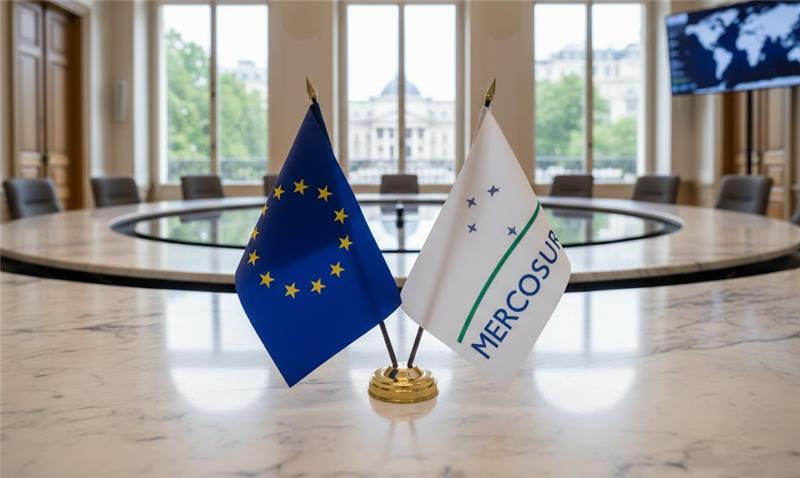
Formal negotiations for the Free Trade Agreement between Mercosur and the European Union began in the year 2000. The final text of the negotiations was concluded on December 6, 2024, and the agreement was signed on January 17, 2026, in Asunción, Paraguay.
In the field of intellectual property, this Agreement reaffirms the Parties’ obligations under the TRIPS Agreement and other multilateral treaties, allowing each legal system to determine its own method of implementation. It establishes objectives aimed at ensuring an adequate and effective level of protection of intellectual property rights, while balancing incentives for innovation with the public interest, access to knowledge, and the transfer of technology.
The general provisions recognize the need to prevent abuses of rights and to ensure that protection measures are compatible with sustainable development, public health, and relevant international instruments. The chapter incorporates rules on national treatment, biodiversity, traditional knowledge, exhaustion of rights, and public health in accordance with the Doha Declaration.
In the area of copyright and related rights, the Agreement enshrines exclusive rights for authors, performers, phonogram producers, and broadcasting organizations, as well as minimum terms of protection and provisions on exceptions, technological measures, and collective management.
With respect to trademarks, the Agreement provides for registration procedures, opposition mechanisms, public databases, protection of well‑known marks, and actions against bad‑faith applications. In industrial designs, it establishes protection for new and original designs, exclusive rights, a minimum term of 15 years, and limited exceptions.
The geographical indications regime establishes a broad system of mutual recognition and protection, including rules on coexistence with trademarks, prior use, generic terms, homonymous indications, and mechanisms for updating protected lists.
On patents, the Agreement promotes adherence to the PCT; on plant varieties, it requires protection in accordance with the 1978 or 1991 UPOV Acts. The chapter also incorporates a detailed regime on trade secrets, including definitions, unlawful acts, exceptions, and judicial measures to preserve confidentiality.
Finally, regarding enforcement, the Agreement sets standards for civil, administrative, and border measures, including the obtaining and preservation of evidence, precautionary measures, damages, destruction of infringing goods, and institutional cooperation between the Parties.
The Agreement must undergo two essential stages within the European Union: (1) approval by the European Parliament (Europarliament), which must deliberate on the already‑signed text; and (2) ratification by all 27 EU Member States in accordance with their internal procedures. Moreover, each Mercosur Member State must comply with its own constitutional procedure for legislative approval.